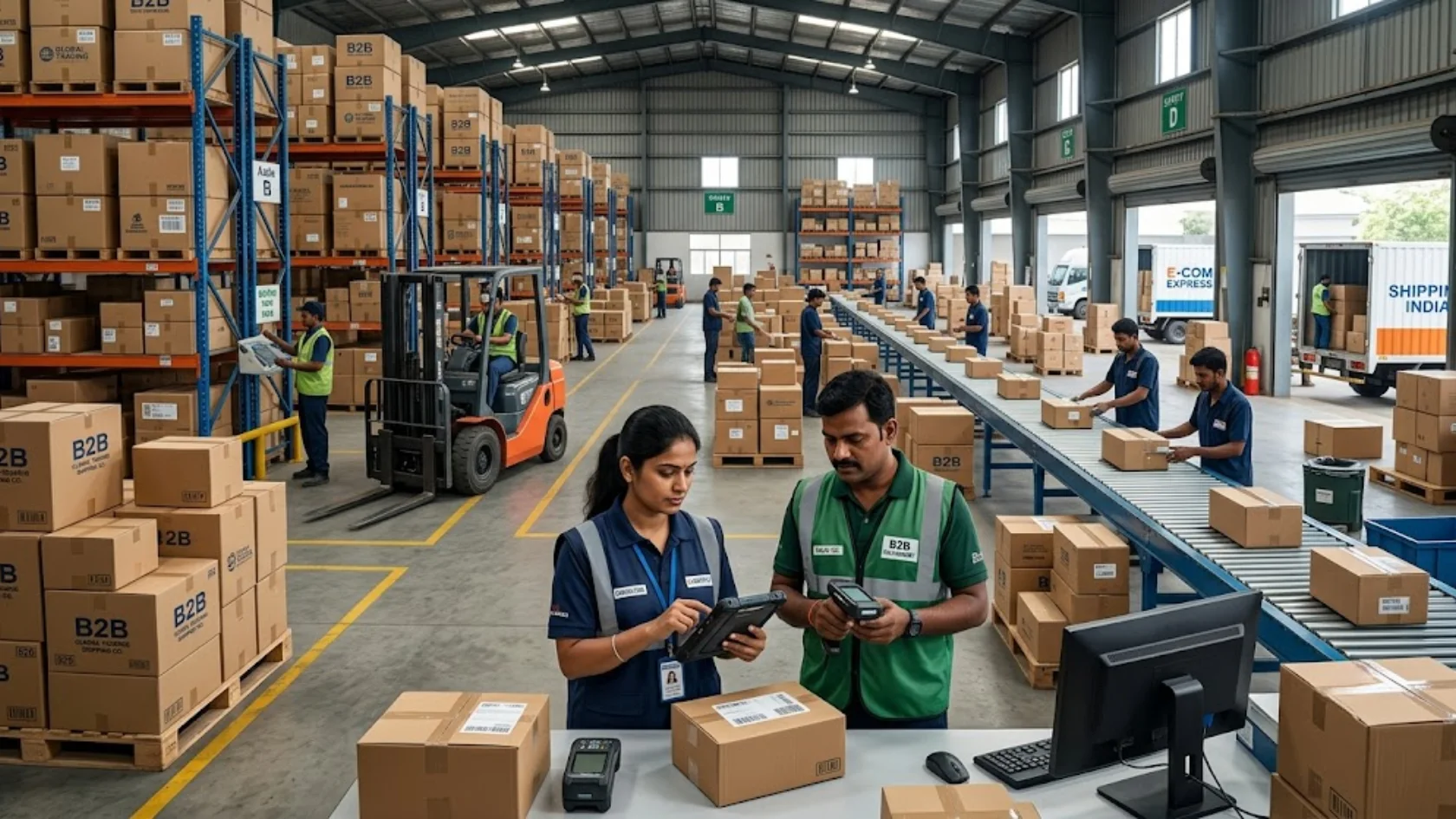
B2B fulfillment determines how efficiently a business can deliver large, complex orders to distributors, retailers, institutions, and bulk buyers. Unlike consumer orders, B2B fulfillment often involves larger volumes, stricter documentation, and tighter delivery expectations. This guide explains what B2B fulfillment is, why it matters, and how to manage it effectively.
What Is B2B Fulfillment?
B2B fulfillment is the process of managing and delivering orders placed by other businesses, such as distributors, retailers, institutions, or bulk buyers, rather than individual consumers. It covers everything from order processing to final dispatch, often at much larger volumes than typical consumer orders.
In simple terms: B2B fulfillment is how a business delivers large, business-to-business orders accurately, on time, and in the right quantities.
Because B2B orders often involve ongoing relationships, contracts, and repeat business, getting fulfillment right is critical for maintaining trust with business customers.
Why B2B Fulfillment Matters
B2B fulfillment matters because business customers, unlike individual consumers, often rely on consistent, large-scale, and accurate deliveries to run their own operations. A strong B2B fulfillment process helps businesses:
- Maintain reliable supply to distributors and retail partners
- Meet strict documentation and compliance requirements
- Handle large order volumes without delays or errors
- Build long-term trust with institutional and bulk buyers
- Reduce costly errors in high-value business orders
Without effective B2B fulfillment, businesses risk damaging important partner relationships, losing contracts, and disrupting their customers’ own operations.
Key Components of B2B Fulfillment
Managing B2B fulfillment well requires four core components working together, each suited to a different type of business customer and order.
Distributor Fulfillment
Distributor fulfillment involves managing and delivering orders placed by distributors, who then sell or supply products further down the chain to retailers or other businesses. These orders are often recurring and tied to ongoing contracts.
Good distributor fulfillment includes:
- Processing recurring orders accurately and on schedule
- Managing bulk stock allocation for distributor accounts
- Coordinating delivery timelines aligned with distributor operations
- Maintaining accurate account-level order history
- Handling credit terms and invoicing specific to distributor agreements
Reliable distributor fulfillment is essential since distributors depend on consistent supply to meet their own downstream commitments.
Retail Fulfillment
Retail fulfillment covers orders placed by retail businesses, such as stores or chains, that need regular stock replenishment to keep their shelves full. These orders are typically smaller than distributor orders but more frequent.
Effective retail fulfillment includes:
- Processing frequent, smaller-volume orders efficiently
- Meeting retailer-specific delivery schedules and requirements
- Ensuring accurate order quantities to avoid overstock or understock
- Managing returns or exchanges according to retail agreements
- Coordinating with retail partners on promotional or seasonal demand
Strong retail fulfillment helps retail partners keep their shelves stocked consistently, which directly supports their own sales performance.
Institutional Orders
Institutional orders come from organizations such as hospitals, schools, government bodies, or large corporations that purchase products for internal use rather than resale. These orders often come with formal procurement processes and specific compliance requirements.
Managing institutional orders typically involves:
- Following formal procurement and documentation procedures
- Meeting specific compliance or certification requirements
- Handling large, one-time or periodic bulk orders
- Coordinating delivery to specific institutional locations
- Managing longer approval and payment cycles common with institutions
Institutional orders often require more administrative coordination, but they can also represent stable, high-value business relationships.
Bulk Dispatches
Bulk dispatches involve preparing and delivering very large quantities of product in a single shipment, often for large distributors, big-box retailers, or major institutional buyers. These shipments require careful planning to execute accurately.
Effective bulk dispatch management includes:
- Planning logistics and transportation for large shipment volumes
- Coordinating loading and dispatch schedules in advance
- Verifying quantities carefully before large shipments leave the warehouse
- Managing documentation required for high-volume shipments
- Ensuring warehouse capacity can support bulk order preparation
Because bulk dispatches involve high volumes and high value, even small errors can have a significant impact, making accuracy and planning especially important.
Common Challenges in B2B Fulfillment
B2B fulfillment comes with challenges that differ from typical consumer fulfillment:
- Complex documentation: institutional and distributor orders often require specific paperwork and compliance checks
- Large order accuracy: errors in bulk orders can be costly and damage business relationships
- Varying delivery requirements: different business customers have different scheduling and location needs
- Credit and invoicing complexity: managing terms that vary by account or contract
- Coordination at scale: handling multiple large orders simultaneously without delays
These challenges are exactly why more businesses are turning to technology to manage their B2B fulfillment.
How Technology Improves B2B Fulfillment
Technology has changed how businesses manage B2B fulfillment. Instead of relying on manual coordination for large, complex orders, businesses now use digital tools to keep every order accurate and on schedule.
Technology helps by:
- Automating order processing for distributor and retail accounts
- Managing documentation and compliance requirements for institutional orders
- Improving accuracy and planning for large bulk dispatches
- Providing real-time visibility into order status across business accounts
- Reducing errors in high-value, high-volume shipments
This shift toward digital B2B fulfillment helps businesses maintain strong, reliable relationships with distributors, retailers, and institutional partners.
How Rholab Helps with B2B Fulfillment
Rholab supports businesses in managing every part of their B2B fulfillment, from distributor fulfillment to large-scale bulk dispatches. Rholab’s approach focuses on giving businesses clear visibility into order accuracy, delivery schedules, and documentation across every type of business customer.
By bringing distributor fulfillment, retail fulfillment, institutional orders, and bulk dispatches into one connected process, Rholab helps businesses maintain reliable supply, meet compliance requirements, and strengthen relationships with their business partners.
Let’s Clear Things Up
Q1. What is the difference between B2B fulfillment and B2C fulfillment?
The primary difference is the customer and order complexity. B2B fulfillment handles larger, recurring orders for businesses, often requiring palletized shipments, scheduled deliveries, EDI integration, and compliance labeling. B2C fulfillment focuses on individual customer orders, smaller package sizes, faster shipping, and direct home delivery. Businesses with wholesale operations typically need specialized B2B fulfillment services.
Q2. Why is B2B fulfillment important for growing businesses?
B2B fulfillment helps businesses improve order accuracy, shorten delivery times, reduce inventory costs, and strengthen relationships with retailers and distributors. A reliable fulfillment process also minimizes shipping errors, supports business growth, and ensures products reach customers according to agreed service levels.
Q3. What services are typically included in B2B fulfillment?
Most B2B fulfillment providers offer a complete range of services, including:
- Inventory storage and warehouse management
- Order processing and picking
- Packing and palletization
- Freight and carrier management
- EDI integration
- Compliance labeling and documentation
- Inventory tracking and reporting
- Returns management
These services help businesses streamline supply chain operations and improve efficiency.
Q4. How do I choose the best B2B fulfillment provider?
When selecting a B2B fulfillment provider, consider factors such as warehouse locations, industry experience, technology integrations, inventory visibility, shipping network, pricing transparency, scalability, and customer support. The right provider should support your current order volume while accommodating future business growth.
Q5. Can B2B fulfillment services integrate with ERP and eCommerce platforms?
Yes. Most modern B2B fulfillment companies integrate with popular ERP systems, warehouse management systems (WMS), inventory management software, and eCommerce platforms. These integrations automate order processing, synchronize inventory in real time, reduce manual work, and improve overall operational efficiency.
Q6. What industries benefit the most from B2B fulfillment services?
Many industries rely on B2B fulfillment, including manufacturing, wholesale distribution, consumer packaged goods (CPG), healthcare, electronics, automotive, food and beverage, apparel, and industrial supplies. Any business that ships products to retailers, distributors, or commercial customers can benefit from professional B2B fulfillment solutions.
Q7. How does B2B fulfillment improve inventory management?
B2B fulfillment improves inventory management by providing real-time stock visibility, automated inventory updates, demand forecasting support, and accurate order tracking. Better inventory control reduces stockouts, prevents overstocking, and helps businesses make data-driven purchasing decisions.
Q8. What are the biggest challenges in B2B fulfillment?
Common B2B fulfillment challenges include managing large order volumes, meeting retailer compliance requirements, maintaining inventory accuracy, coordinating freight shipments, handling seasonal demand fluctuations, and ensuring on-time deliveries. Partnering with an experienced fulfillment provider helps businesses overcome these challenges more efficiently.
Q9. How can outsourcing B2B fulfillment reduce costs?
Outsourcing B2B fulfillment allows businesses to avoid investing in warehouse space, staffing, equipment, and logistics infrastructure. Professional fulfillment providers leverage established shipping networks, automation, and optimized warehouse operations to reduce storage costs, lower shipping expenses, improve order accuracy, and help businesses scale without significant capital investment.
Q10. How is distributor fulfillment different from retail fulfillment?
Distributor fulfillment typically involves larger, recurring orders tied to ongoing supply agreements, while retail fulfillment involves smaller, more frequent orders focused on keeping store shelves stocked.
Let’s Recap
B2B fulfillment plays a critical role in maintaining strong relationships with distributors, retailers, institutions, and bulk buyers. Success in this area depends on reliable distributor fulfillment, efficient retail fulfillment, careful handling of institutional orders, and accurate bulk dispatch management.
Businesses that manage these components well build lasting trust with their business customers and support smooth operations across the supply chain.
If you want to strengthen your B2B fulfillment and get better visibility across distributor, retail, institutional, and bulk orders, Rholab can help you build a more connected and reliable fulfillment process. Reach out to Rholab today to see how smarter B2B fulfillment can grow your business.