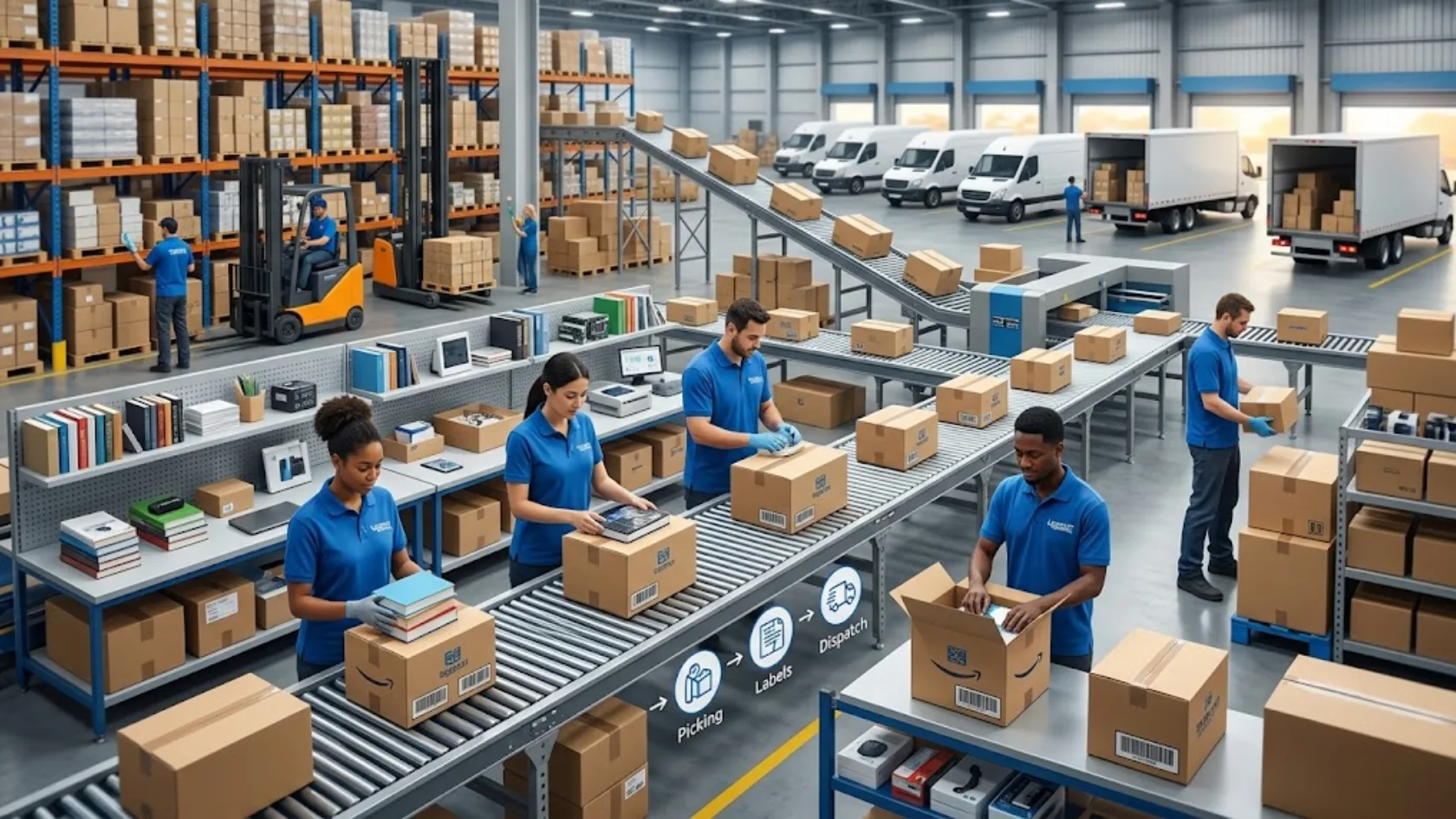
Marketplace fulfillment determines how well a business can deliver orders across the different online platforms it sells on, from major marketplaces to its own online store. As businesses expand into multiple sales channels, keeping fulfillment consistent across each one becomes a growing challenge. This guide explains what marketplace fulfillment is, why it matters, and how to manage it across platforms like Daraz, Shopify, and WooCommerce.
What Is Marketplace Fulfillment?
Marketplace fulfillment is the process of managing order fulfillment across different online selling platforms, including third-party marketplaces and self-hosted online stores. Each platform has its own order flow, requirements, and customer expectations, which makes coordinated fulfillment essential.
In simple terms: marketplace fulfillment is how a business makes sure every order, no matter which online platform it came from, is picked, packed, and delivered correctly and on time.
As businesses sell across more platforms, marketplace fulfillment becomes the operational backbone that keeps every channel running smoothly, without duplicated effort or fulfillment errors.
Why Marketplace Fulfillment Matters
Marketplace fulfillment matters because inconsistent fulfillment across platforms leads to delays, stock mismatches, and a poor customer experience. A strong marketplace fulfillment process helps businesses:
- Fulfill orders accurately across every platform they sell on
- Avoid overselling by keeping stock synced across channels
- Meet each platform’s specific delivery and performance requirements
- Scale into new sales channels without operational breakdowns
- Maintain consistent service quality no matter where the order came from
Without effective marketplace fulfillment, businesses risk order delays, stock discrepancies, and platform penalties for missed delivery targets.
Key Components of Marketplace Fulfillment
Managing marketplace fulfillment well means understanding how fulfillment works across major platforms, along with coordinating everything through a single, unified process.
Daraz Fulfillment
Daraz fulfillment involves managing orders placed through the Daraz marketplace, one of the region’s largest online shopping platforms. Fulfilling orders on Daraz requires meeting the platform’s specific processing and delivery timelines.
Daraz fulfillment typically involves:
- Syncing inventory to avoid overselling on the platform
- Processing orders within Daraz’s required timeframes
- Meeting Daraz’s packaging and labeling requirements
- Coordinating pickup and delivery through approved courier partners
- Monitoring seller performance metrics to maintain good account standing
Consistent Daraz fulfillment helps sellers maintain strong ratings and avoid penalties tied to late or incorrect deliveries.
Shopify Fulfillment
Shopify fulfillment covers order processing for businesses selling through their own Shopify-powered online store. Since Shopify stores are self-hosted, fulfillment here often involves more direct control over the customer experience.
Shopify fulfillment typically involves:
- Automatically syncing orders from the Shopify store to fulfillment systems
- Managing inventory levels directly tied to the storefront
- Coordinating packing and shipping based on store-specific branding needs
- Providing tracking updates directly to customers
- Handling returns and exchanges through the store’s own policies
Because Shopify fulfillment is tied directly to a brand’s own store, it offers more flexibility in packaging, branding, and customer communication compared to third-party marketplaces.
WooCommerce Fulfillment
WooCommerce fulfillment involves managing orders from a WooCommerce-powered online store, a popular option for businesses running their store on WordPress. Like Shopify, WooCommerce fulfillment gives businesses more direct control over their fulfillment process.
WooCommerce fulfillment typically involves:
- Integrating the WooCommerce store with inventory and order systems
- Keeping stock levels updated in real time to prevent overselling
- Managing order processing and shipping workflows specific to the store
- Coordinating returns and refunds according to store policy
- Ensuring consistent packaging and delivery standards
WooCommerce fulfillment requires careful integration since WooCommerce stores often rely on multiple plugins and custom configurations that need to work smoothly with fulfillment systems.
Multi-Channel Fulfillment
Multi-channel fulfillment ties everything together, managing order fulfillment across all platforms, marketplaces, and stores from a single, unified process. Instead of treating each channel separately, multi-channel fulfillment centralizes inventory, orders, and delivery coordination.
Effective multi-channel fulfillment includes:
- Centralizing inventory across all connected platforms to prevent overselling
- Consolidating orders from every channel into one fulfillment workflow
- Applying consistent packaging and delivery standards across channels
- Providing unified reporting on fulfillment performance across all platforms
- Scaling fulfillment operations as new channels are added
Multi-channel fulfillment is what allows businesses to expand into new marketplaces and platforms without fulfillment becoming fragmented or inconsistent.
Common Challenges in Marketplace Fulfillment
Marketplace fulfillment comes with real challenges, especially as businesses sell across more platforms:
- Inventory mismatches: stock not synced accurately across multiple channels, leading to overselling
- Platform-specific requirements: each marketplace has different packaging, labeling, and timeline rules
- Fragmented order management: orders coming from different platforms without a unified process
- Inconsistent delivery experience: customers receiving different service quality depending on the channel
- Scaling difficulties: fulfillment processes that don’t scale smoothly as new channels are added
These challenges are exactly why more businesses are turning to technology to manage their marketplace fulfillment.
How Technology Improves Marketplace Fulfillment
Technology has changed how businesses manage marketplace fulfillment. Instead of manually managing orders and stock across each platform separately, businesses now use digital tools to centralize the entire process.
Technology helps by:
- Syncing inventory in real time across Daraz, Shopify, WooCommerce, and other channels
- Consolidating orders from multiple platforms into a single fulfillment workflow
- Automating platform-specific packaging and labeling requirements
- Providing unified visibility into fulfillment performance across all channels
- Making it easier to add new sales channels without disrupting existing operations
This shift toward centralized, technology-driven fulfillment helps businesses scale across platforms without losing accuracy or consistency.
How Rholab Helps with Marketplace Fulfillment
Rholab supports businesses in managing marketplace fulfillment across Daraz, Shopify, WooCommerce, and other sales channels through one connected, multi-channel process. Rholab’s approach focuses on giving businesses centralized inventory visibility, consistent order processing, and reliable delivery coordination, regardless of which platform an order comes from.
By bringing platform-specific fulfillment and multi-channel coordination into a single process, Rholab helps businesses fulfill orders accurately, avoid overselling, and maintain consistent service quality as they grow across marketplaces.
Here’s What You Need to Know
Q1. What is multi-channel fulfillment?
Multi-channel fulfillment centralizes order fulfillment across all sales platforms into a single, unified process, preventing overselling and keeping delivery standards consistent across every channel.
Q2. How does marketplace fulfillment work?
Marketplace fulfillment works by storing your inventory in a fulfillment center. When a customer places an order on a marketplace, the fulfillment provider automatically receives the order, picks and packs the product, ships it to the customer, and often handles tracking updates and returns. This automation helps sellers reduce manual work and improve order accuracy.
Q3. What are the benefits of using marketplace fulfillment services?
Marketplace fulfillment services help businesses save time, reduce shipping costs, improve delivery speed, and scale operations efficiently. They also provide inventory management, automated order processing, and multi-channel fulfillment, allowing sellers to focus on growing their business instead of handling logistics.
Q4. Is marketplace fulfillment suitable for small businesses?
Yes. Marketplace fulfillment is an excellent solution for small and growing businesses because it eliminates the need to manage warehouse operations and shipping in-house. By outsourcing fulfillment, small businesses can offer faster delivery, improve customer satisfaction, and compete more effectively with larger retailers.
Q5. What is the difference between marketplace fulfillment and third-party logistics (3PL)?
Marketplace fulfillment focuses on processing orders from online marketplaces, while third-party logistics (3PL) covers a broader range of supply chain services, including warehousing, transportation, inventory management, and fulfillment across marketplaces, eCommerce websites, wholesale, and retail channels. Many marketplace fulfillment providers also operate as 3PL companies.
Q6. Can marketplace fulfillment support multiple online marketplaces?
Yes. Most modern marketplace fulfillment providers integrate with multiple sales channels, including Amazon, Walmart Marketplace, eBay, Shopify, WooCommerce, BigCommerce, and other eCommerce platforms. This allows businesses to manage inventory and fulfill orders from one centralized system.
Q7. How can marketplace fulfillment improve customer satisfaction?
Marketplace fulfillment improves customer satisfaction by ensuring faster shipping, accurate order fulfillment, real-time tracking, and efficient returns management. Reliable fulfillment reduces shipping delays and order errors, helping businesses earn positive reviews and build customer trust.
Q8. How much does marketplace fulfillment cost?
Marketplace fulfillment costs vary depending on factors such as storage space, order volume, product size, shipping destination, and additional services like returns processing or custom packaging. Most providers charge separate fees for storage, picking and packing, shipping, and value-added services.
Q9. How do I choose the best marketplace fulfillment provider?
When choosing a marketplace fulfillment provider, consider integration capabilities, shipping speed, warehouse locations, pricing transparency, inventory management tools, customer support, scalability, and return handling. Selecting a provider that supports your sales channels and business growth can improve operational efficiency and customer experience.
Q10. Why is marketplace fulfillment important for eCommerce growth?
Marketplace fulfillment is essential for eCommerce growth because it enables businesses to deliver orders quickly, manage inventory efficiently, reduce operational costs, and expand across multiple marketplaces without increasing logistical complexity. A reliable fulfillment strategy helps businesses scale while maintaining high levels of customer satisfaction and operational performance.
To Sum Up
Marketplace fulfillment is essential for businesses selling across multiple platforms, from major marketplaces like Daraz to self-hosted stores on Shopify and WooCommerce. Success in this area depends on understanding platform-specific requirements while managing everything through a strong multi-channel fulfillment process.
Businesses that manage marketplace fulfillment well avoid overselling, deliver orders consistently, and scale into new channels with confidence.
If you want to strengthen your marketplace fulfillment across Daraz, Shopify, WooCommerce, and beyond, Rholab can help you build a more connected and efficient multi-channel fulfillment process. Reach out to Rholab today to see how smarter marketplace fulfillment can grow your business.