eCommerce fulfillment solutions determine how quickly, accurately, and reliably an online order reaches the customer’s doorstep. From the moment a customer clicks “buy” to the moment the package arrives, every step in between shapes the customer’s experience and your brand’s reputation. This guide explains what eCommerce fulfillment is, why it matters, and how to manage it effectively.
What Is eCommerce Fulfillment?
eCommerce fulfillment is the complete process of getting an online order from the warehouse to the customer. It covers picking and packing products, processing orders, coordinating with couriers, handling returns, and managing final delivery.
In simple terms: eCommerce fulfillment is everything that happens between a customer placing an order online and that order arriving safely at their door.
As online shopping continues to grow, fast and accurate fulfillment has become one of the biggest factors influencing customer satisfaction and repeat purchases.
Why eCommerce Fulfillment Matters
eCommerce fulfillment matters because it directly shapes the customer experience after checkout, which is when trust is either built or lost. A strong fulfillment process helps businesses:
- Deliver orders faster and more reliably
- Reduce errors like wrong items or damaged packaging
- Lower the cost of returns and re-shipments
- Improve customer satisfaction and repeat purchase rates
- Handle order volume spikes without operational breakdowns
Without effective eCommerce fulfillment, even the best products and marketing can be undone by late, incorrect, or damaged deliveries.
Key Components of eCommerce Fulfillment
Managing eCommerce fulfillment well requires six core components working together, covering the full journey from order to delivery.
Pick & Pack
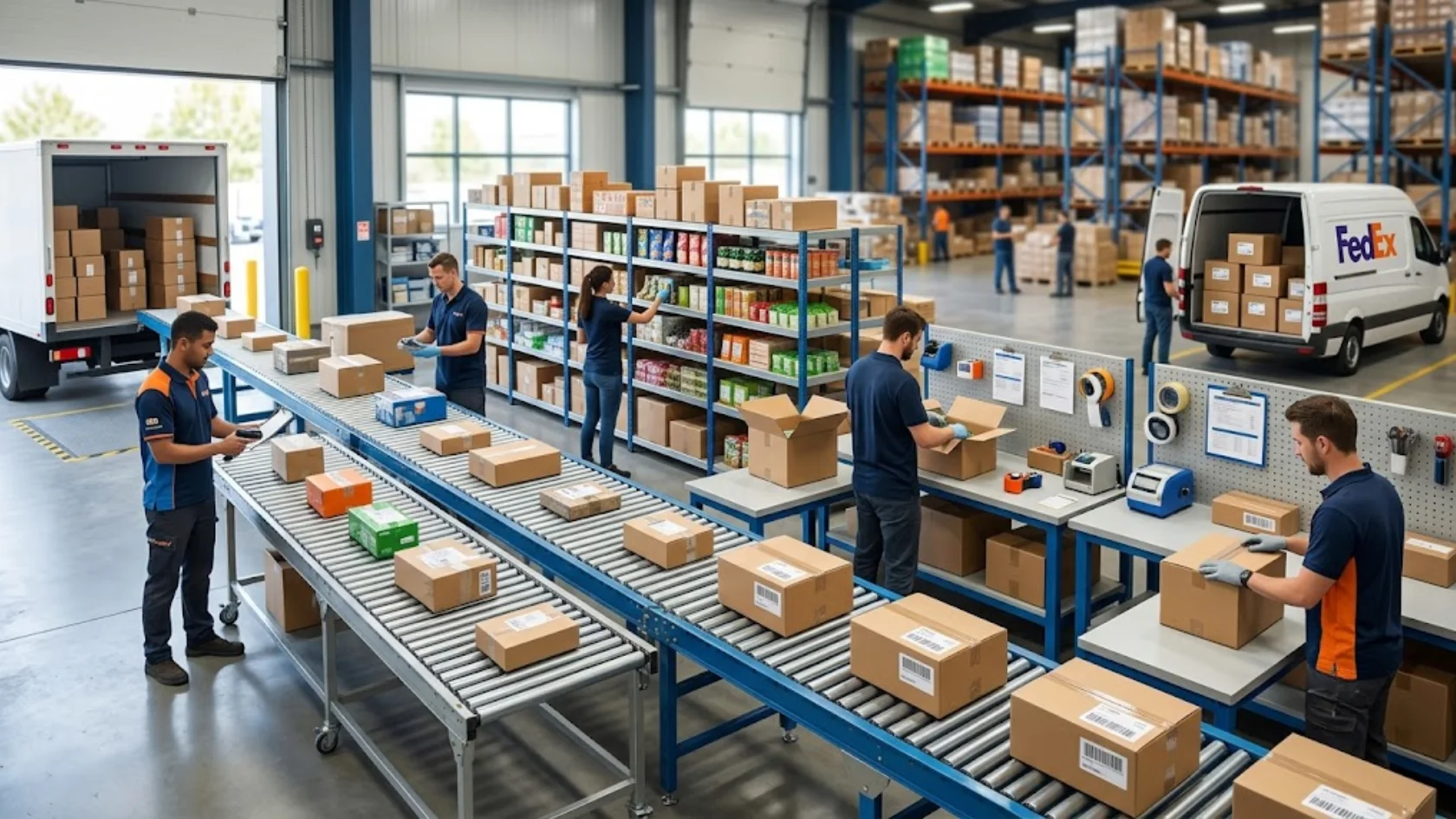
Pick and pack is the foundation of eCommerce fulfillment. It involves locating the correct products in the warehouse and preparing them for shipment based on each customer’s order.
Good pick and pack processes include:
- Accurately picking items based on order details
- Verifying picked items against the order before packing
- Minimizing picking errors through organized storage
- Packing items efficiently to reduce time per order
- Handling special items, like fragile or oversized products, with care
Accurate pick and pack directly reduces the chances of wrong items being shipped, which is one of the most common causes of returns.
Packaging
Packaging covers how products are protected and presented before shipment. It plays a role in both product safety during transit and the overall unboxing experience for the customer.
Effective packaging practices include:
- Selecting appropriate packaging materials based on product type
- Ensuring products are protected from damage during transit
- Using right-sized packaging to reduce shipping costs and waste
- Including necessary documentation, such as invoices or return labels
- Maintaining consistent packaging standards across all orders
Good packaging protects products in transit while also shaping how customers perceive a brand when the package arrives.
Order Processing
Order processing is the administrative and operational workflow that turns a placed order into a fulfillment task. It connects the online order to the physical fulfillment process.
Order processing typically includes:
- Capturing and validating orders as they come in
- Checking stock availability before confirming orders
- Generating pick lists, invoices, and shipping labels
- Prioritizing orders based on shipping method or urgency
- Updating order status at each stage for customer visibility
Fast and accurate order processing keeps the rest of the fulfillment chain moving without unnecessary delays.
Courier Coordination
Courier coordination involves managing the relationship and logistics between a business and the courier or delivery partners responsible for getting orders to customers.
Effective courier coordination includes:
- Selecting the right courier based on delivery speed, cost, or location
- Scheduling pickups and managing handover of packed orders
- Tracking shipments and resolving delivery delays or issues
- Managing courier performance and service-level agreements
- Coordinating with multiple couriers to cover different regions
Strong courier coordination ensures packages actually leave the warehouse on time and reach customers within expected delivery windows.
Returns Management
Returns management covers the process of handling products that customers send back, whether due to defects, wrong items, or simple change of mind. It’s an essential part of eCommerce fulfillment that directly affects customer trust.
Good returns management includes:
- Making the returns process simple and clear for customers
- Inspecting returned items for condition and reason
- Restocking sellable returns quickly and accurately
- Processing refunds or replacements promptly
- Tracking return reasons to identify recurring product or process issues
Smooth returns management turns a potentially negative experience into an opportunity to retain customer trust.
Last Mile by Rhofleet
Last mile delivery is the final step where a package moves from a local hub to the customer’s doorstep. It’s often the most visible part of fulfillment to the customer, and delays or issues here can undo good work done earlier in the process.
Rholab’s last mile delivery capability, powered by Rhofleet, focuses on:
- Coordinating final delivery from local hubs to customer addresses
- Providing real-time tracking visibility for the last leg of delivery
- Optimizing delivery routes for faster, more reliable drop-offs
- Reducing failed deliveries through better coordination and communication
A strong last mile delivery process is often the difference between a customer who orders again and one who doesn’t.
Common Challenges in eCommerce Fulfillment
eCommerce fulfillment comes with real challenges, especially as order volumes grow and customer expectations rise:
- Picking errors: incorrect items shipped due to poor warehouse organization
- Packaging damage: products arriving damaged due to inadequate protection
- Order processing delays: slow validation and label generation holding up dispatch
- Courier delays: missed pickups or inconsistent delivery performance
- High return rates: unclear return processes leading to customer frustration
- Last mile failures: missed or delayed final deliveries affecting customer trust
These challenges are exactly why more businesses are turning to technology to manage their eCommerce fulfillment.
How Technology Improves eCommerce Fulfillment
Technology has changed how businesses manage eCommerce fulfillment. Instead of relying on manual coordination across multiple steps, businesses now use digital tools to connect every stage of the fulfillment process.
Technology helps by:
- Guiding accurate, efficient pick and pack workflows
- Automating order processing and status updates
- Providing real-time visibility into courier performance and delivery status
- Simplifying returns processing and restocking
- Optimizing last mile delivery routes and tracking
This shift toward connected, digital fulfillment systems helps businesses deliver orders faster, reduce errors, and keep customers satisfied.
How Rholab Helps with eCommerce Fulfillment
Rholab supports businesses in managing every part of their eCommerce fulfillment, from pick and pack to last mile delivery through Rhofleet. Rholab’s approach focuses on giving businesses clear visibility into order status, courier performance, and delivery outcomes at every stage.
By bringing pick and pack, packaging, order processing, courier coordination, returns management, and last mile delivery into one connected process, Rholab helps businesses fulfill orders faster, reduce errors, and build stronger customer trust.
Questions on Your Mind?
Q1. Why is eCommerce fulfillment important for online businesses?
eCommerce fulfillment directly impacts customer satisfaction, shipping speed, and repeat purchases. A reliable fulfillment process ensures accurate order processing, faster deliveries, fewer shipping errors, and efficient inventory management, helping online businesses improve customer loyalty and scale their operations.
Q2. What are the main steps in the eCommerce fulfillment process?
The typical eCommerce fulfillment process includes:
- Receiving inventory
- Warehousing and storage
- Inventory management
- Order processing
- Picking and packing
- Shipping and delivery
- Returns management
Each step is designed to ensure customers receive the correct products on time.
Q3. What is the difference between eCommerce fulfillment and order fulfillment?
Order fulfillment refers to the process of completing any customer order, whether online or offline. eCommerce fulfillment specifically focuses on fulfilling orders placed through online stores and often includes integrations with eCommerce platforms, automated inventory updates, and shipping tracking.
Q4. Should I outsource eCommerce fulfillment or manage it in-house?
The right choice depends on your business size and order volume. In-house fulfillment offers greater control but requires more resources. Outsourcing to a third-party logistics (3PL) provider can reduce operational costs, improve shipping efficiency, and allow businesses to focus on sales, marketing, and customer growth.
Q5. How can faster eCommerce fulfillment improve customer experience?
Faster eCommerce fulfillment reduces delivery times, improves order accuracy, and provides real-time tracking updates. Customers are more likely to leave positive reviews, make repeat purchases, and recommend your business when orders arrive quickly and in good condition.
Q6. What should I look for in an eCommerce fulfillment partner?
A reliable eCommerce fulfillment partner should offer:
- Fast and accurate order processing
- Real-time inventory tracking
- Multiple shipping options
- Easy platform integrations
- Returns management
- Transparent pricing
- Scalable fulfillment services
These features help businesses deliver a better customer experience while supporting long-term growth.
Q7. How does inventory management affect eCommerce fulfillment?
Effective inventory management ensures products are available when customers place orders. Accurate inventory tracking helps prevent stockouts, overselling, delayed shipments, and unnecessary storage costs, resulting in smoother eCommerce fulfillment and higher customer satisfaction.
Q8. What are the biggest challenges in eCommerce fulfillment?
Common eCommerce fulfillment challenges include inventory inaccuracies, shipping delays, rising fulfillment costs, seasonal demand fluctuations, and handling product returns. Using automation, inventory management software, and experienced fulfillment providers can help businesses overcome these challenges.
Q9. How can businesses optimize their eCommerce fulfillment process?
Businesses can optimize eCommerce fulfillment by automating order processing, maintaining accurate inventory records, selecting strategically located warehouses, offering multiple shipping options, monitoring fulfillment performance, and partnering with experienced fulfillment providers. These improvements can reduce costs, speed up deliveries, and enhance the overall customer experience.
Q10. Why is courier coordination important in eCommerce fulfillment?
Courier coordination ensures packages are picked up and delivered on time. Poor courier coordination can lead to missed pickups, delivery delays, and a poor customer experience.
Final Takeaway
eCommerce fulfillment is what turns an online order into a satisfied customer. Success in this area depends on accurate pick and pack, protective packaging, efficient order processing, reliable courier coordination, smooth returns management, and dependable last mile delivery.
Businesses that manage these components well deliver orders faster, reduce errors, and build long-term customer loyalty.
If you want to strengthen your eCommerce fulfillment and get better visibility from pick and pack through to last mile delivery, Rholab, with last mile support from Rhofleet, can help you build a more connected and reliable fulfillment process. Reach out to Rholab today to see how smarter eCommerce fulfillment can grow your business.