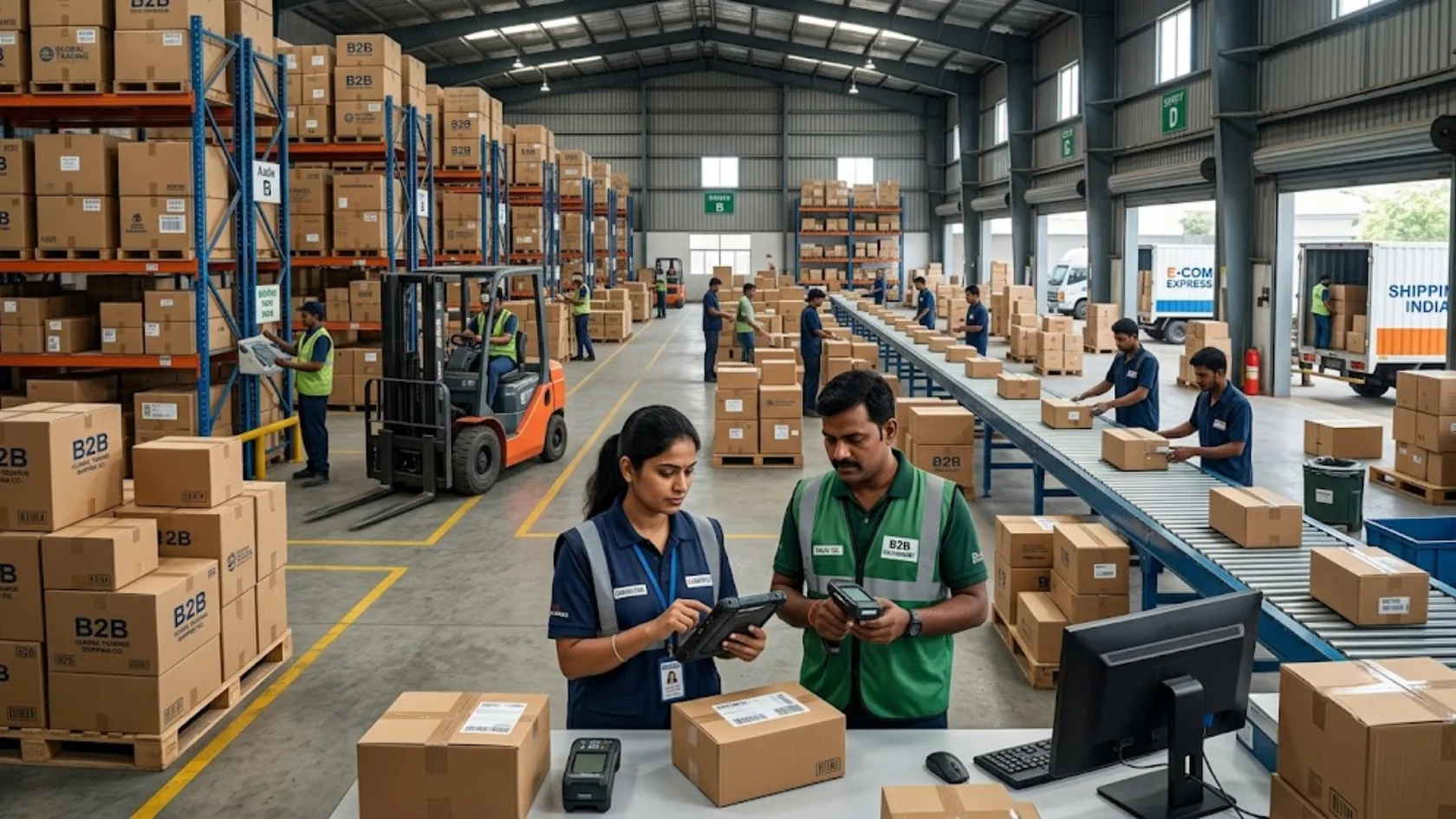
What Is B2B Fulfillment in Pakistan?
B2B fulfillment in Pakistan is the process of storing, picking, packing, documenting and dispatching large-volume orders from a brand or manufacturer to other businesses, such as distributors, retailers, institutions and wholesale buyers, across Pakistani cities. Unlike consumer parcels, B2B orders move in cartons and pallets, run against purchase orders, and must arrive complete, on time and with correct invoices.
For FMCG, pharma, consumer durables and industrial brands, B2B fulfillment is the link between the factory or import warehouse and the shelf. A missed delivery window at a modern trade store or a short-shipped distributor order costs sales, chargebacks and trust.
This guide explains how B2B fulfillment works in Pakistan, how it differs from eCommerce fulfillment, what it costs, and what to look for in a partner. It draws on how Rholab runs dedicated B2B fulfillment for distributor, retail, institutional and bulk dispatch orders.
Key takeaways
- B2B fulfillment handles bulk, scheduled, document-heavy orders for business buyers.
- In Pakistan it serves four main order types: distributor, retail, institutional and bulk dispatch.
- Accuracy, delivery windows and correct sales tax invoicing matter more than parcel speed.
- Outsourcing to a 3PL like Rholab turns fixed warehouse and fleet costs into variable costs.
B2B vs B2C Fulfillment: What Is the Difference?
B2B fulfillment ships fewer, larger orders to businesses on agreed schedules, while B2C fulfillment ships many small parcels to consumers on demand. The table shows how the two models differ in Pakistan.
| Factor | B2B fulfillment | B2C (eCommerce) fulfillment |
| Customer | Distributors, retailers, institutions, wholesalers | Individual shoppers |
| Order size | Cartons, pallets, full or part truckloads | 1 to 5 units per parcel |
| Order trigger | Purchase order (PO), contract, replenishment schedule | Website, Daraz or social media checkout |
| Picking method | Case and pallet picking, FEFO/FIFO by batch | Each (unit) picking |
| Documents | PO, delivery challan, sales tax invoice, packing list, GRN | Shipping label, COD slip |
| Payment | Credit terms, bank transfer, cheque | Mostly cash on delivery (COD) |
| Transport | Dedicated vehicles, FTL/LTL freight, milk runs | Courier networks, last-mile riders |
| Delivery window | Fixed appointment slots at stores and DCs | Flexible, 1 to 5 days |
| Main KPI | Order fill rate, OTIF, invoice accuracy | Delivery speed, return-to-origin rate |
Many Pakistani brands now need both. A single 3PL that runs B2B and eCommerce fulfillment from one inventory pool avoids stock splits between channels.
How Does B2B Fulfillment Work? (Step by Step)
B2B fulfillment works in eight steps, from receiving stock to confirming delivery and closing the invoice.
- Inbound receiving: Stock arrives from the factory, port or supplier. Cartons are counted, checked against the ASN, and batch and expiry dates are recorded.
- Putaway and storage: Goods are stored by SKU, batch and expiry in racked locations, tracked in a warehouse management system (WMS).
- Order intake: Purchase orders arrive from distributors, retail chains or institutions by email, EDI, portal or the brand’s ERP.
- Allocation and picking: The WMS allocates stock using FEFO (first expiry, first out) or FIFO and generates case or pallet pick lists.
- Quality check and packing: Picked quantities are verified, palletised, shrink-wrapped and labelled with PO number, consignee and carton count.
- Documentation: Delivery challan, packing list and sales tax invoice are prepared and matched to the PO.
- Dispatch and transport: Orders are loaded on dedicated vehicles or consolidated loads, routed to meet store or DC appointment slots.
- Proof of delivery and reconciliation: The buyer signs a GRN or POD. Shortages, damages and returns are reconciled and stock records updated.
The difference between average and excellent B2B fulfillment sits in steps 4 to 6. Short shipments, wrong batches and invoice mismatches cause more disputes with B2B buyers than slow trucks do.
The B2B Fulfillment Landscape in Pakistan
B2B fulfillment in Pakistan is shaped by a distributor-led supply chain, fast-growing modern trade, large institutional buyers and new digital tax rules. Each buyer type expects something different from the warehouse.
- Distributors and general trade: Most FMCG volume still reaches kiryana stores through regional distributors. Distributors order in bulk, on credit, and need stock to land before their own route-sales cycle starts.
- Modern trade and retail chains: Supermarkets, hypermarkets, cash-and-carry stores and pharmacy chains in Karachi, Lahore and Islamabad work on delivery appointments, strict labelling and short shelf-life acceptance windows.
- Institutional buyers: Hospitals, schools, corporates, hotels, caterers and government departments buy through tenders and contracts, with fixed specifications and full documentation.
- Bulk and project dispatches: Seasonal pushes such as Ramadan, Eid and back-to-school, plus product launches, create one-off spikes of full-truckload orders.
Digital invoicing changes B2B paperwork. Under SRO 1413(I)/2025, FBR obligates all sales tax registered persons to integrate with its computerised system through a licensed integrator and issue digital invoices (FBR Sales Tax General Order 01 of 2026). For B2B shipments, this means the invoice that travels with the goods must match the order, quantity and buyer details exactly. A fulfillment partner whose dispatch records sync with your ERP and invoicing system reduces mismatch risk.
Infrastructure realities also matter. Long distances between Karachi port and northern markets, intercity freight costs, load-shedding, monsoon disruption and limited modern racked warehouse space push many brands toward specialised 3PL warehouses instead of building their own.
Rholab B2B Fulfillment Services in Pakistan
Rholab supports large-scale order processing through dedicated B2B fulfillment, handling distributor, retail, institutional and bulk dispatch orders with speed, accuracy and reliability. Each service is built around how that buyer actually receives goods.
1. Distributor Fulfillment
Distributor fulfillment means supplying regional and city distributors with full-case and pallet orders on a planned replenishment cycle. Rholab picks against distributor POs, prioritises by batch and expiry, consolidates loads by territory, and ships with matched invoices and delivery challans so distributors can receive and sell without disputes.
Best for: FMCG, food, beverage, personal care and OTC brands that sell through general trade.
2. Retail Fulfillment
Retail fulfillment is replenishing supermarkets, hypermarkets, pharmacy chains and franchise stores to their delivery rules. Rholab follows each retailer’s labelling, packing, shelf-life and appointment requirements, and ships store-wise or to the chain’s distribution centre, so orders are accepted first time.
Best for: Brands listed in modern trade chains and branded retail outlets.
3. Institutional Orders
Institutional order fulfillment solutions hospitals, schools, corporates, hotels, caterers and government buyers that purchase against contracts or tenders. Rholab handles specification checks, batch traceability, scheduled deliveries and the documentation institutions require for their GRN and payment process.
Best for: Pharma, medical supplies, food service, stationery, cleaning and office supply brands.
4. Bulk Dispatches
Bulk dispatch is moving large one-off or seasonal volumes, such as Ramadan and Eid stock-ups, product launches, trade promotions or inter-city stock transfers. Rholab plans labour and vehicles in advance, palletises and loads for full or part truckloads, and tracks every consignment to proof of delivery.
Best for: Seasonal peaks, launches, nationwide pushes and warehouse-to-warehouse transfers.
Services at a glance
| Service | Typical buyer | Order format | What Rholab manages |
| Distributor Fulfillment | Regional and city distributors | Full cases, pallets, recurring POs | FEFO picking, territory load consolidation, invoices and challans |
| Retail Fulfillment | Supermarkets, pharmacy and retail chains | Store-wise or DC orders | Retailer labelling rules, appointment slots, shelf-life compliance |
| Institutional Orders | Hospitals, schools, corporates, government | Contract or tender orders | Spec checks, batch traceability, scheduled delivery, documentation |
| Bulk Dispatches | Any B2B buyer, internal transfers | FTL/LTL, seasonal volume | Capacity planning, palletising, loading, tracking to POD |
Because B2B fulfillment runs on the same warehouse operations as Rholab’s eCommerce and marketplace fulfillment, brands can serve distributors, chains and online customers from one inventory pool.
Benefits of Outsourcing B2B Fulfillment
Outsourcing B2B fulfillment lets a brand ship bulk orders accurately without owning a warehouse, fleet or dispatch team. The main benefits are:
- Lower fixed costs: Warehouse rent, racking, forklifts, staff and vehicles become a pay-per-use cost.
- Higher order accuracy: WMS-driven picking, batch control and pre-dispatch checks cut short shipments and wrong-batch deliveries.
- On-time, in-full delivery: Planned loads and appointment management help meet retailer and distributor delivery windows.
- Scalability for peaks: Ramadan, Eid and launch volumes are absorbed without hiring temporary staff or renting extra space.
- Clean documentation: Invoices, challans and PODs are matched to each PO, which speeds up payments from B2B buyers.
- Real-time visibility: Stock, order status and delivery confirmations are available without chasing the warehouse.
- Focus on growth: Sales and trade marketing teams spend time on distribution coverage, not dispatch firefighting.
Who needs B2B fulfillment in Pakistan?
- Local manufacturers and FMCG brands selling to distributors and modern trade
- Importers and international brands entering Pakistan without their own warehouse
- Pharma and healthcare suppliers serving hospitals and pharmacy chains
- D2C and eCommerce brands expanding into retail shelves
- Wholesalers and traders managing multi-city bulk orders
How Much Does B2B Fulfillment Cost in Pakistan?
B2B fulfillment in Pakistan is usually priced per activity, not per order, so total cost depends on volume, storage time and delivery distance. Most 3PL quotes combine the charges below.
| Cost component | How it is usually charged | What drives it up |
| Inbound handling | Per pallet, carton or container | Loose-loaded containers, mixed SKUs, unclear ASNs |
| Storage | Per pallet position per month | Slow-moving stock, temperature control, long dwell time |
| Picking and packing | Per case, per pallet or per order line | Each-level picking, many SKUs per order, custom labelling |
| Value-added services | Per unit or per task | Shrink-wrapping, bundling, promo packs, relabelling |
| Documentation | Per order or included | Retailer-specific paperwork, multiple invoice formats |
| Transport | Per trip, per km or per kg/CBM | Long-haul routes, small part loads, fixed appointment slots |
| Returns and reverse logistics | Per carton or per return | Damaged or near-expiry returns needing inspection |
The best way to compare quotes is cost per case or cost per order delivered in full, not the lowest storage rate. Rholab prepares custom quotes based on a brand’s SKU count, monthly order profile, buyer mix and delivery cities.
How to Choose a B2B Fulfillment Partner in Pakistan
Choose a B2B fulfillment partner that proves accuracy, handles all your buyer types and integrates with your systems. Use this checklist when evaluating providers:
- Handles distributor, retail, institutional and bulk orders, not just eCommerce parcels
- Runs a WMS with batch, expiry and serial tracking (FEFO/FIFO)
- Shares order fill rate and OTIF figures from current clients
- Has experience with modern trade delivery rules and appointment slots
- Produces invoices, challans and PODs matched to each PO
- Can integrate with your ERP and FBR digital invoicing workflow
- Offers its own or managed transport for intercity and in-city deliveries
- Has secure, insured, racked warehouse space with CCTV and access control
- Can scale labour and vehicles for Ramadan, Eid and launch peaks
- Gives transparent, activity-based pricing with no hidden charges
- Provides a dedicated account manager and clear escalation path
Questions to ask before signing: What was your OTIF last quarter? How do you handle short shipments and damages? What happens to near-expiry stock? How fast can you onboard a new SKU or retailer?
Common B2B Fulfillment Challenges and Solutions
The biggest B2B fulfillment problems in Pakistan are order inaccuracy, missed delivery windows, expiry losses and paperwork mismatches. Each has a practical fix.
| Challenge | Impact | Solution |
| Short or wrong shipments | Retailer chargebacks, distributor disputes | Scan-based picking and pre-dispatch quantity checks |
| Missed delivery appointments | Rejected loads, re-delivery costs | Route planning and appointment booking per retailer |
| Near-expiry stock | Write-offs, rejected deliveries | FEFO allocation and expiry alerts in the WMS |
| Invoice and PO mismatches | Delayed payments, tax compliance risk | Documents generated from the same order record as the pick |
| Seasonal demand spikes | Backlogs during Ramadan and Eid | Advance capacity planning with a scalable 3PL |
| Poor visibility | Sales teams cannot promise dates | Real-time stock and order status dashboards |
Key B2B fulfillment KPIs to track
- Order fill rate: Share of ordered units shipped in the first delivery.
- OTIF (on time, in full): Share of orders delivered complete within the agreed window.
- Order accuracy: Share of orders shipped with the right SKU, batch and quantity.
- Dock-to-stock time: Hours from truck arrival to stock being available to pick.
- Order cycle time: Time from PO receipt to dispatch.
- Inventory accuracy: Match between system stock and physical count.
B2B fulfillment trends in Pakistan
- Invoice-level tax reporting: FBR digital invoicing pushes brands to connect warehouse dispatch data with their invoicing systems.
- Omnichannel inventory: Brands serve distributors, modern trade and eCommerce from one stock pool instead of separate warehouses.
- Digital ordering by distributors and retailers: B2B ordering apps and portals replace phone and WhatsApp orders, raising expectations for fast, accurate replenishment.
- Outsourcing over ownership: More brands choose 3PL warehouses over building their own to manage costs and scale.
Commonly Asked Questions
Q1. What is B2B fulfillment?
B2B fulfillment is the storage, picking, packing, documentation and delivery of bulk orders from a brand to other businesses, such as distributors, retailers, institutions and wholesalers. Orders usually move in cases or pallets against purchase orders.
Q2. What is the difference between B2B and B2C fulfillment?
B2B fulfillment ships large, scheduled orders to businesses with invoices and credit terms. B2C fulfillment ships small parcels to individual consumers, often with cash on delivery. B2B focuses on accuracy and delivery windows, while B2C focuses on speed.
Q3. Which companies offer B2B fulfillment in Pakistan?
Third-party logistics (3PL) providers offer B2B fulfillment in Pakistan. Rholab provides dedicated B2B fulfillment covering distributor fulfillment, retail fulfillment, institutional orders and bulk dispatches.
Q4. What types of B2B orders can be outsourced?
Brands can outsource distributor replenishment orders, modern trade and retail chain orders, institutional and tender orders, and bulk or seasonal dispatches, including inter-city stock transfers.
Q5. How much does B2B fulfillment cost in Pakistan?
B2B fulfillment costs in Pakistan depend on inbound handling, monthly pallet storage, picking per case or pallet, value-added services and transport distance. Providers usually give custom quotes based on order volume, SKU count and delivery cities.
Q6. Why is order accuracy so important in B2B fulfillment?
In B2B, one wrong or short shipment can affect hundreds of units, trigger retailer chargebacks and delay payment. Accurate picking, batch control and matched invoices protect both revenue and buyer relationships.
Q7. Does B2B fulfillment include sales tax invoicing?
A fulfillment partner prepares dispatch documents such as delivery challans and packing lists and can align them with your invoices. The sales tax invoice itself is issued by the registered seller, so warehouse records should match your FBR digital invoicing data.
Q8. Can one warehouse handle both B2B and eCommerce orders?
Yes. An omnichannel 3PL can fulfill bulk B2B orders and single eCommerce parcels from the same inventory. Rholab runs B2B, eCommerce and marketplace fulfillment on shared warehouse operations, which avoids splitting stock between channels.
Q9. How do I know if my business needs a B2B fulfillment partner?
You likely need one if you are missing delivery windows, facing short-shipment disputes, struggling with seasonal peaks, or spending more on warehouse space and staff than your volume justifies.
Looking Ahead
B2B fulfillment in Pakistan decides whether your products reach distributors, retail shelves and institutional buyers complete, on time and correctly invoiced. As modern trade grows, buyers tighten delivery rules and FBR moves to invoice-level reporting, accuracy and documentation now matter as much as speed.
The brands that win treat B2B fulfillment as a capability, not a back-office task. They track OTIF and fill rate, plan for seasonal peaks, and work with a partner that can handle every buyer type from one inventory pool.
Ready to Scale Your B2B Orders?
Rholab handles distributor fulfillment, retail fulfillment, institutional orders and bulk dispatches across Pakistan, so your team can focus on selling. Contact Rholab today for a custom B2B fulfillment quote and see how dedicated fulfillment can improve your delivery accuracy and reliability.