Reverse logistics determines how well a business handles the flow of products moving backward, from the customer or retailer back into the warehouse. Whether it’s a returned item, a damaged shipment, or a replacement request, how a business manages this process affects costs, customer trust, and inventory accuracy. This guide explains what reverse logistics is, why it matters, and how to manage it effectively.
What Is Reverse Logistics?
Reverse logistics is the process of managing the movement of goods from their final destination back to the business, typically for returns, damage handling, or replacements. It is essentially the opposite of standard forward logistics, which moves products from the warehouse to the customer.
In simple terms: reverse logistics is how a business handles products coming back, making sure they are processed, inspected, and resolved correctly.
As return rates rise across retail and eCommerce, reverse logistics has become just as important as forward fulfillment for protecting margins and customer satisfaction.
Why Reverse Logistics Matters
Reverse logistics matters because how a business handles returns, damage, and replacements directly affects customer trust, inventory accuracy, and operational costs. A strong reverse logistics process helps businesses:
- Process customer and retailer returns quickly and accurately
- Recover value from returned or damaged stock where possible
- Maintain accurate inventory records despite reverse stock flow
- Resolve replacement requests without unnecessary delays
- Build customer confidence by making returns simple and fair
Without effective reverse logistics, businesses risk inventory inaccuracies, rising costs from mishandled returns, and frustrated customers.
Key Components of Reverse Logistics
Managing reverse logistics well requires three core components working together, covering the full journey of a product once it starts moving backward through the supply chain.
Returns Processing
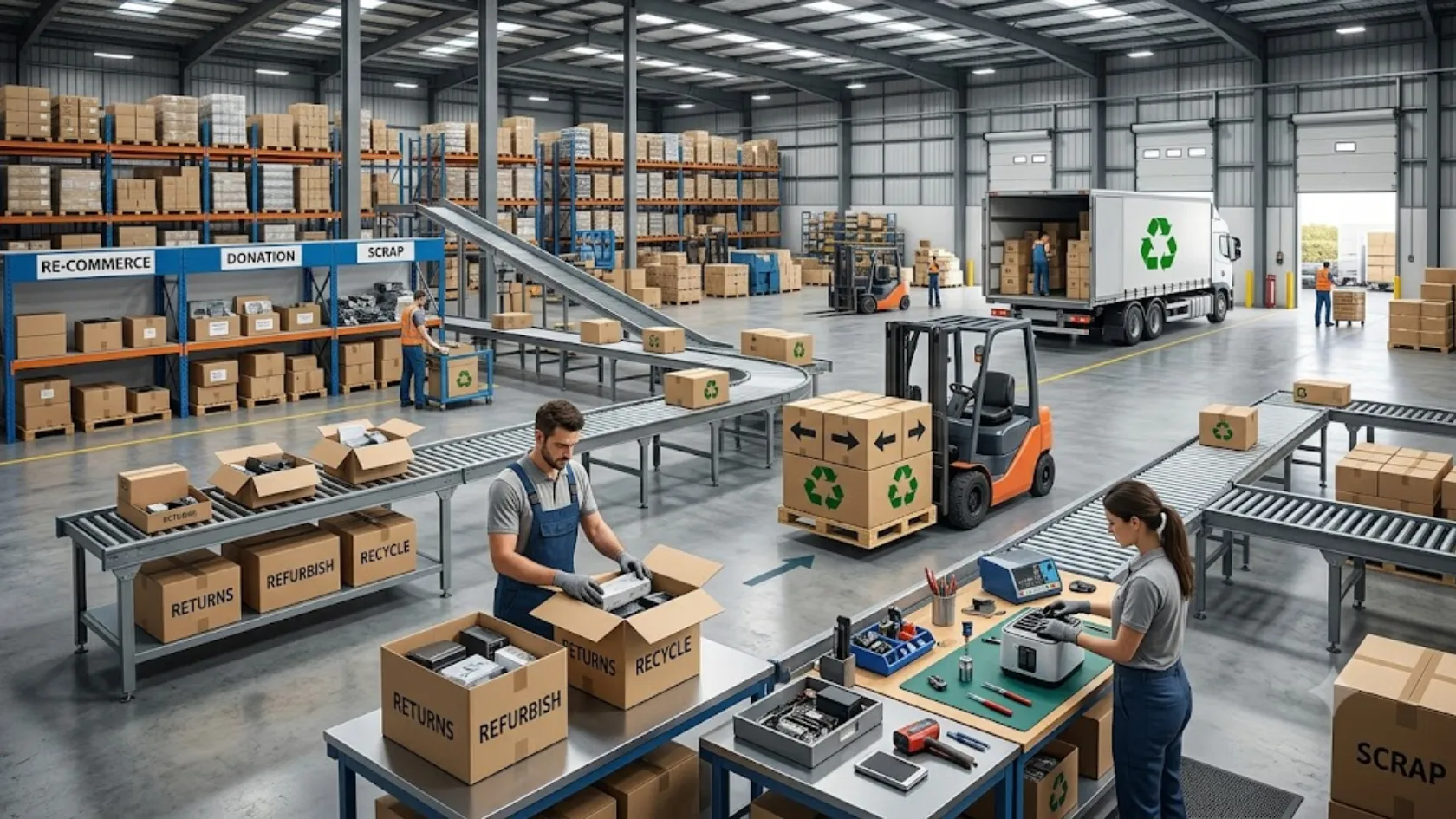
Returns processing is the foundation of reverse logistics. It covers everything involved in receiving, inspecting, and deciding what happens to a product once a customer or retailer sends it back.
Good returns processing includes:
- Setting clear, simple return policies for customers and retailers
- Receiving and logging returned items into the system
- Inspecting returned products to determine their condition
- Deciding whether items are restocked, refurbished, or discarded
- Processing refunds or credits promptly once a return is verified
Efficient returns processing reduces the time between a return being initiated and the resolution reaching the customer or retailer.
Damage Management
Damage management involves identifying, documenting, and handling products that are damaged, whether during transit, storage, or use. Proper damage management prevents damaged stock from being mixed with sellable inventory.
Effective damage management includes:
- Inspecting incoming and returned stock for visible damage
- Documenting damage with clear records and, where needed, photos
- Separating damaged stock from sellable inventory immediately
- Determining next steps, such as repair, disposal, or supplier claims
- Analyzing damage patterns to identify recurring causes, like poor packaging or rough handling
Consistent damage management protects customers from receiving damaged goods and helps businesses identify where damage is happening in the supply chain.
Replacement Handling
Replacement handling covers the process of sending a new or repaired product to a customer or retailer when the original item is defective, damaged, or incorrect. It’s often the resolution step that follows returns or damage findings.
Good replacement handling includes:
- Verifying that a replacement is the appropriate resolution
- Processing replacement orders quickly to minimize customer wait time
- Coordinating stock allocation specifically for replacements
- Communicating clearly with customers throughout the replacement process
- Tracking replacement volumes to spot recurring product issues
Fast, well-managed replacement handling turns a potentially frustrating situation into a positive customer experience.
Common Challenges in Reverse Logistics
Reverse logistics comes with real challenges, especially as return volumes grow across retail and eCommerce:
- Slow processing times: delays in inspecting and resolving returns frustrate customers
- Inventory inaccuracy: returned stock not properly recorded, throwing off inventory counts
- Inconsistent damage assessment: no clear criteria for what counts as damaged or sellable
- Replacement delays: slow coordination leading to long customer wait times
- Lack of visibility: limited data on return reasons, making it hard to fix root causes
These challenges are exactly why more businesses are turning to technology to manage their reverse logistics.
How Technology Improves Reverse Logistics
Technology has changed how businesses manage reverse logistics. Instead of relying on manual tracking and disconnected processes, businesses now use digital tools to manage returns, damage, and replacements in one place.
Technology helps by:
- Speeding up returns processing with digital tracking and workflows
- Standardizing damage documentation and assessment
- Automating replacement order creation and stock allocation
- Providing real-time visibility into return and replacement volumes
- Helping identify patterns behind returns and damage for long-term fixes
This shift toward digital reverse logistics helps businesses resolve returns and replacements faster while keeping inventory records accurate.
How Rholab Helps with Reverse Logistics
Rholab supports businesses in managing every part of their reverse logistics, from returns processing to replacement handling. Rholab’s approach focuses on giving businesses clear visibility into returned and damaged stock, along with faster, more accurate replacement coordination.
By bringing returns processing, damage management, and replacement handling into one connected process, Rholab helps businesses resolve returns quickly, protect inventory accuracy, and maintain customer trust even when something goes wrong.
Frequently Asked Queries
Q1. How does reverse logistics work in the supply chain?
Reverse logistics begins when a customer returns a product or when goods need repair, recycling, or disposal. The returned item is inspected, sorted, and directed to the appropriate destination, such as restocking inventory, refurbishing, repairing, recycling, or safe disposal. An efficient reverse logistics process minimizes costs and improves supply chain performance.
Q2. What are the main benefits of reverse logistics for businesses?
Reverse logistics helps businesses reduce return-related costs, recover value from returned products, improve inventory management, increase customer satisfaction, enhance brand reputation, and meet environmental compliance requirements. It also supports a circular economy by extending the life of products.
Q3. What is the difference between reverse logistics and traditional logistics?
Traditional logistics focuses on moving products from manufacturers to customers, while reverse logistics manages the movement of products from customers back to businesses. Reverse logistics includes returns, repairs, recycling, refurbishment, warranty claims, and product recalls, making it an essential part of modern supply chain management.
Q4. Which industries benefit the most from reverse logistics services?
Reverse logistics is widely used in e-commerce, retail, electronics, automotive, healthcare, pharmaceuticals, manufacturing, and consumer goods industries. Businesses with high product return rates or recycling requirements benefit the most from efficient reverse logistics solutions.
Q5. How can reverse logistics improve customer satisfaction?
A fast and hassle-free return process builds customer trust and encourages repeat purchases. Efficient reverse logistics enables quicker refunds, exchanges, repairs, and warranty services, creating a better customer experience while reducing delays and complaints.
Q6. What challenges do companies face in reverse logistics management?
Common reverse logistics challenges include high transportation costs, managing returned inventory, product inspection delays, fraud prevention, inaccurate return forecasting, and coordinating multiple supply chain partners. Using automation and data-driven logistics systems can help overcome these challenges.
Q7. How does reverse logistics support sustainability and the circular economy?
Reverse logistics reduces landfill waste by enabling products to be repaired, refurbished, reused, or recycled instead of discarded. This process conserves natural resources, lowers carbon emissions, and helps businesses achieve sustainability goals while supporting circular economy practices.
Q8. What technologies are used to optimize reverse logistics?
Businesses use warehouse management systems (WMS), transportation management systems (TMS), barcode and RFID tracking, artificial intelligence (AI), machine learning, predictive analytics, Internet of Things (IoT) devices, and automation to improve reverse logistics efficiency, visibility, and decision-making.
Q9. How can businesses choose the right reverse logistics partner?
When selecting a reverse logistics provider, businesses should evaluate industry experience, nationwide or global network coverage, technology capabilities, return processing speed, inventory visibility, sustainability practices, regulatory compliance, customer support, and pricing. A reliable reverse logistics partner can streamline returns, reduce costs, and improve overall supply chain performance.
Q10. How is reverse logistics different from forward logistics?
Forward logistics moves products from the warehouse to the customer, while reverse logistics manages the opposite flow, handling products coming back due to returns, damage, or replacement needs.
Wrapping It All Up
Reverse logistics plays a critical role in protecting customer trust and inventory accuracy when products need to come back into the supply chain. Success in this area depends on efficient returns processing, consistent damage management, and fast, reliable replacement handling.
Businesses that manage these components well turn returns and replacements into a smooth experience rather than a costly, frustrating one.
If you want to strengthen your reverse logistics and get better visibility across returns, damage, and replacements, Rholab can help you build a more connected and reliable reverse logistics process. Reach out to Rholab today to see how smarter reverse logistics can protect and grow your business.